
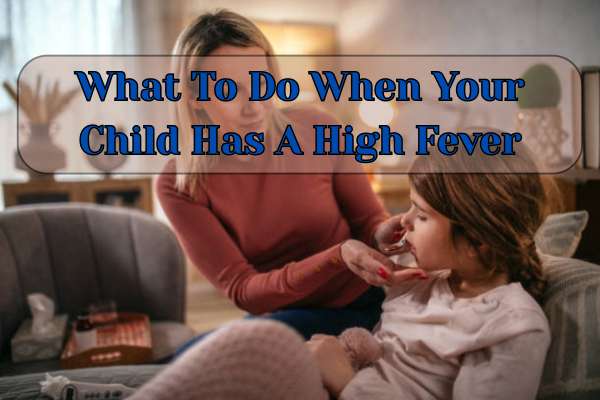
Your child’s forehead feels like a furnace. The thermometer reads 103°F. Your stomach drops.
Before you panic — take a breath. A fever is not the enemy. It is your child’s immune system doing exactly what it is supposed to do: fighting infection. But 103°F in a child does deserve your attention, and what you do next depends on one thing more than anything else: how old your child is.
Here is a practical, age-specific guide to managing a high fever in children — what to watch for, when to treat at home, and when to call your pediatrician or head to the ER.
Is 103 a High Fever for a Child?
Yes — 103°F (39.4°C) is considered a high fever for a child. Any temperature at or above 103°F warrants careful monitoring and, in most cases, contact with your child’s doctor.
To put it in context:
Low-grade fever: 99°F – 100.4°F
Moderate fever: 100.4°F – 102.9°F
High fever: 103°F – 103.9°F
Very high fever: 104°F and above — call your doctor immediately
Emergency: 105°F+ — go to the ER
A 103 fever in a child is serious, but it is not automatically an emergency. Age, behavior, and accompanying symptoms matter enormously.
Age-by-Age Guide: What to Do at 103°F
Newborns (0–3 Months)
Do not wait. Any fever of 100.4°F or higher in a baby under 3 months is a medical emergency. Call 911 or go to the ER immediately. Their immune systems cannot handle infection the same way older children can. A 103 fever in a newborn should never be managed at home.
6-Month-Old With a 103 Fever
A 6-month-old with a 103 fever needs to be evaluated by a doctor the same day — not tomorrow, not after a wait-and-see night. At this age, babies cannot tell you where it hurts. They may have an ear infection, a urinary tract infection, or something else entirely.
Call your pediatrician right away. Signs that make it more urgent:
The fever has lasted more than 24 hours
The baby is unusually lethargic or hard to wake
Not drinking fluids or producing wet diapers
Rash appearing alongside the fever
Breathing looks labored
Do not give ibuprofen to babies under 6 months. Acetaminophen (Tylenol) dosed by your doctor’s guidance is appropriate for infants 2 months and older.
16-Month-Old With a 103 Fever
A 16-month-old with a 103 fever is in a different situation than a newborn, but still needs attention. At 16 months, toddlers are entering peak ear-infection and viral-illness season. Most causes at this age are viral and will resolve on their own — but 103°F is high enough that you should contact your pediatrician, especially if:
The fever has persisted beyond 48 hours
Your child is not eating or drinking
They are unusually irritable or inconsolable
The fever went away and then came back
You can give acetaminophen or ibuprofen (ibuprofen is appropriate for children 6 months and older) at the correct dose for your child’s weight. Do not dose by age alone — weight determines the right amount.
Children 2–5 Years Old
At this age, a 103 fever child response shifts slightly. The child can often communicate discomfort. Monitor closely. Treat with fever reducers if the child is uncomfortable, ensure fluids, and call your doctor if the fever:
Reaches 104°F or above
Lasts more than 48–72 hours without improvement
Is accompanied by a stiff neck, rash, difficulty breathing, or seizure
Children 6 Years and Older
Older children handle fevers better. A 103 fever in a school-age child is still worth monitoring, but you have more room to manage at home with medication and fluids before calling. Contact your doctor if the fever hits 104°F, lasts beyond three days, or if your child looks genuinely unwell — pale, lethargic, not responding normally.
How to Bring Down a High Fever at Home
For children who are old enough, here is what works:
1. Give the right fever reducer at the right dose. Acetaminophen (Tylenol) and ibuprofen (Motrin, Advil) both work. Dose strictly by weight, not age. When in doubt, call your pediatrician’s nurse line — they deal with this question dozens of times a day.
Do not give aspirin to children. It is linked to a rare but serious condition called Reye’s syndrome.
2. Keep fluids going. Fever burns through fluids fast. Water, diluted juice, oral rehydration solutions, and breast milk for infants all help. If your child refuses to drink anything for several hours, call your doctor.
3. Dress them lightly. Heavy blankets trap heat. Dress your child in a single layer. Keep the room cool but not cold.
4. Lukewarm sponge bath — not cold. A lukewarm bath can offer comfort and help with surface temperature. Cold water causes shivering, which actually raises core body temperature. Skip the ice packs.
5. Rest. Not much more to say here. Let them sleep.
When to Call Your Pediatrician
Call your doctor — not later, now — if:
Your child is under 3 months and has any fever at all
Your child is 6 months old with a 103 fever and it has lasted more than 24 hours
Your child is 16 months old with a 103 fever and seems very unwell or not drinking
The fever reaches 104°F at any age
There is a rash, especially one that does not fade when pressed
Your child has a febrile seizure (call 911)
The child has a stiff neck or sensitivity to light
Breathing is rapid, labored, or noisy
At Mill Brook Pediatrics, same-day appointments for fever evaluation are available. If you are unsure whether your child needs to be seen, call the office — the nursing staff can help you decide over the phone.
When to Go to the ER
Call 911 or go directly to the emergency room if your child:
Has a seizure
Is unresponsive or unusually limp
Has blue or gray lips or skin
Has a fever above 105°F
Has difficulty breathing or is breathing very fast
Cannot be woken up
These are not “monitor and see” situations.
What Not to Do
A few common mistakes parents make that are worth avoiding:
Do not alternate fever reducers without guidance. Some doctors do advise alternating acetaminophen and ibuprofen, but only on a specific schedule. Do this only if your pediatrician recommends it.
Do not give cold baths. They feel awful for the child and cause shivering.
Do not panic over the number alone. A child with a 103°F fever who is alert, drinking, and interactive is in a very different situation than one who is limp and barely responsive.
Do not overdose on medication. This is one of the most common fever-related mistakes. Acetaminophen overdose is serious. Always check the dose.
The Bottom Line
A 103 fever in a child is high enough to take seriously — but the child’s age and behavior tell you more than the number does. A 6-month-old with a 103 fever needs to be seen the same day. A 16-month-old with a 103 fever needs a call to the pediatrician. A healthy 8-year-old with a 103 fever who is drinking water and watching TV can often be managed at home with medication and monitoring.
When in doubt, call. Pediatricians — including the team at Mill Brook Pediatrics — are not annoyed by fever calls. It is part of the job, and getting the right answer early is always better than a 2 AM ER visit.


0 Comments