
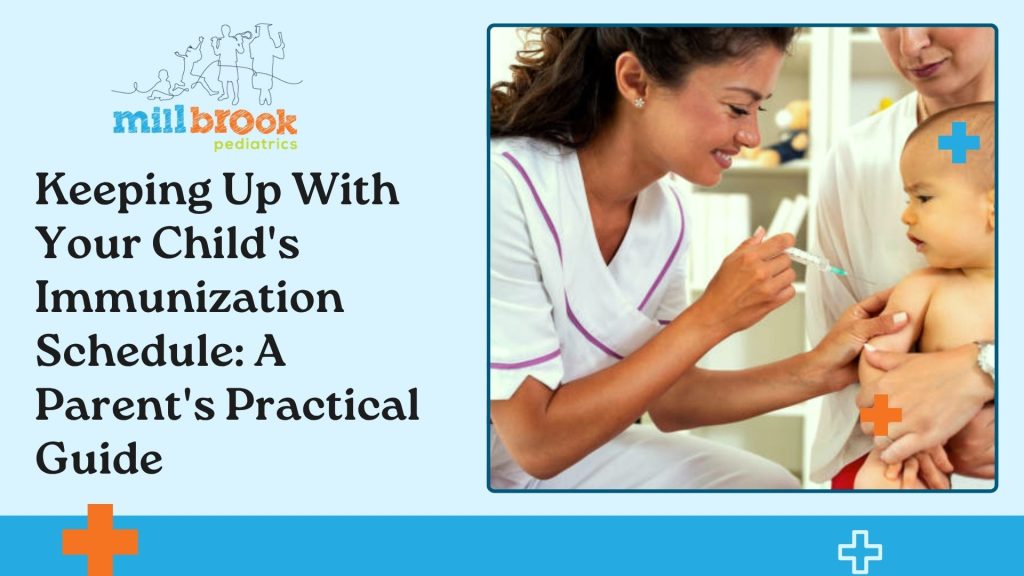
Most parents know vaccines matter. What’s harder is keeping up — remembering which shot comes when, knowing what to expect, and sorting out what’s true when you’re swimming in conflicting information online.
This guide is for that exact situation. It covers the full immunization timeline, what the research actually shows about the safety and efficacy of childhood immunizations, and what to do when you’re not sure you’re on track.
The Schedule Exists for a Reason — And It’s Not Arbitrary
The CDC’s recommended childhood vaccine schedule isn’t a bureaucratic checkbox. It’s built around one specific thing: when a child’s immune system is mature enough to respond, and when the disease risk is highest.
Newborns, for instance, are given the Hepatitis B vaccine within 24 hours of birth. That’s not because newborns are commonly exposed to Hepatitis B. It’s because the window to prevent perinatal transmission — from a mother who may not even know she’s infected — is very narrow. Miss it, and the protection window closes.
That logic applies across the full schedule. Timing isn’t about convenience. It’s about biology.
The Full Immunization Timeline: Birth to 18
Here’s what keeping a child’s immunization schedule on track actually looks like, broken down by age:
At birth:
- Hepatitis B (dose 1)
2 months:
- DTaP (diphtheria, tetanus, whooping cough)
- Hib (protects against meningitis and epiglottitis)
- IPV (polio)
- PCV15 or PCV20 (pneumococcal — covers pneumonia, ear infections, meningitis)
- RV (rotavirus — a common cause of severe infant diarrhea)
- Hepatitis B (dose 2)
4 months:
- Second dose of DTaP, Hib, IPV, PCV, and RV
6 months:
- Third doses of DTaP, IPV, PCV, Hepatitis B
- Annual influenza vaccine begins here
12–15 months:
- MMR (measles, mumps, rubella)
- Varicella (chickenpox)
- Hepatitis A (two doses, spaced 6 months apart)
- Hib and PCV boosters
4–6 years:
- Booster doses of DTaP, IPV, MMR, and Varicella
- These are often given right before kindergarten entry
11–12 years:
- Tdap (the adolescent tetanus/whooping cough booster)
- HPV series (ideally started at 11–12, most effective before first exposure)
- MenACWY (meningococcal — bacterial meningitis)
16 years:
- MenACWY booster
- MenB (meningitis B) — recommended for some adolescents
The full, up-to-date version is always at the CDC’s website. But Mill Brook Pediatrics tracks all of this for your child directly — you don’t need to memorize it. That’s what well-child visits are for.
Why Some Vaccines Come So Early
Parents sometimes ask: why are we giving so many vaccines in the first two years? It feels like a lot. It is a lot — and there’s a real reason.
Infants between 2 and 6 months have a specific vulnerability window. Maternal antibodies (passed through the placenta) start declining right around this time. That’s the exact period when Hib, whooping cough, and pneumococcal disease are most dangerous. Waiting until a child is older to vaccinate means leaving that window unprotected.
Also worth knowing: a child’s immune system encounters thousands of antigens every day just from normal life — touching things, breathing, eating. The antigens in vaccines are a tiny fraction of what the immune system processes routinely. The “too many too soon” concern, while understandable, doesn’t hold up against what we know about infant immunology.
The Safety and Efficacy of Childhood Immunizations: What the Evidence Says
This is where parents most need straight information, not reassurance.
Every vaccine in the CDC schedule has gone through clinical trials before approval — Phase I (safety in small groups), Phase II (expanded safety and dosing), and Phase III (large-scale trials measuring both safety and effectiveness). After approval, the Vaccine Adverse Event Reporting System (VAERS) and the Vaccine Safety Datalink continue monitoring for rare side effects.
The safety and efficacy of childhood immunizations is not a matter of ongoing scientific debate. The data is clear:
- Measles vaccines (MMR) are about 97% effective after two doses
- The DTaP series is 80–90% effective against pertussis (whooping cough), and nearly 100% against the life-threatening complications
- The Hib vaccine has reduced invasive Hib disease by more than 99% since its introduction in the late 1980s
Side effects are real but almost always mild: soreness at the injection site, low-grade fever, fussiness for a day or two. Serious adverse reactions are rare enough that they’re measurable in fractions of a percent — often less than 1 in a million doses.
Why Parents Avoid Certain Vaccines — And What the Data Actually Shows
This is a common concern pediatricians hear regularly, and it deserves a real answer rather than dismissal.
Most vaccine hesitancy traces back to a few specific fears:
The autism concern. This comes from a 1998 study by Andrew Wakefield, published in The Lancet, which suggested a link between the MMR vaccine and autism. The study was later retracted. Wakefield lost his medical license after it emerged that the data had been manipulated and that he had undisclosed financial conflicts of interest. Over a dozen large-scale studies — including one following over 650,000 children in Denmark — have found no connection between vaccines and autism.
Too many at once. Parents worry about “overwhelming” the immune system. This is the concern addressed above — infant immune systems handle far more immunological challenges daily than any vaccine schedule presents.
Ingredient concerns. Thimerosal (a mercury-based preservative) is the most cited. It’s been removed from all routine childhood vaccines in the U.S. since 2001 (except some flu vaccine formulations, and even there the levels are far below any established toxicity threshold).
“My child is healthy, so why take the risk?” This reasoning ignores herd immunity. Measles, for instance, requires about 95% vaccination coverage to prevent outbreaks. When parents avoid certain vaccines for healthy children, it creates gaps that expose the most vulnerable — infants too young to vaccinate, immunocompromised kids, children with genuine contraindications.
None of this means vaccine concerns are stupid. They’re not. But the risk calculation is not close: the documented risks of the diseases are substantially greater than the documented risks of the vaccines.
What to Do If You’ve Fallen Behind
Life happens. A missed appointment, a sick child, a move to a new city — there are a dozen ways to fall behind on the schedule.
The good news is that falling behind doesn’t mean starting over. There are established catch-up schedules for every vaccine. Your pediatrician can run a quick review of your child’s vaccine history and determine exactly what’s needed and in what order.
A few practical things to know:
- Most vaccines can be given during sick visits if the illness is mild (no fever over 101°F)
- If you’re unsure what vaccines your child has received, your state’s immunization registry likely has the record
- Combination vaccines (like MMRV, which covers both MMR and varicella) can reduce the number of injections needed to catch up
The main thing is not to let the gap grow. The longer a child goes unvaccinated, the wider the window of risk.
How to Talk to Your Pediatrician
If you have concerns about a specific vaccine — the timing, a past reaction, a family history — bring it to the appointment. Pediatricians hear these questions constantly. It’s part of the job.
A few things that help make the conversation useful:
- Be specific about what concerns you (a named ingredient, a particular condition, something you read) rather than general hesitation
- Ask about contraindications directly if your child has allergies, immune conditions, or a history of reactions
- Ask for the Vaccine Information Statement (VIS) — by law, providers must give you one before each vaccine. It covers benefits, risks, and what to watch for afterward.
What you should not do: rely on social media or parenting forums as a substitute for that conversation. The information there is inconsistent, often wrong, and not specific to your child.
Mill Brook Pediatrics Keeps You on Track
Keeping a child’s immunization schedule up to date is genuinely one of the most effective health decisions a parent makes. Not because vaccines are magic — but because they work, the evidence is solid, and the diseases they prevent are real.
If your child is due for a vaccine, overdue, or you simply want to review where they stand, Mill Brook Pediatrics is here to help. We walk through the schedule with you, answer your questions directly, and make sure your child is protected at every stage of development.



0 Comments