
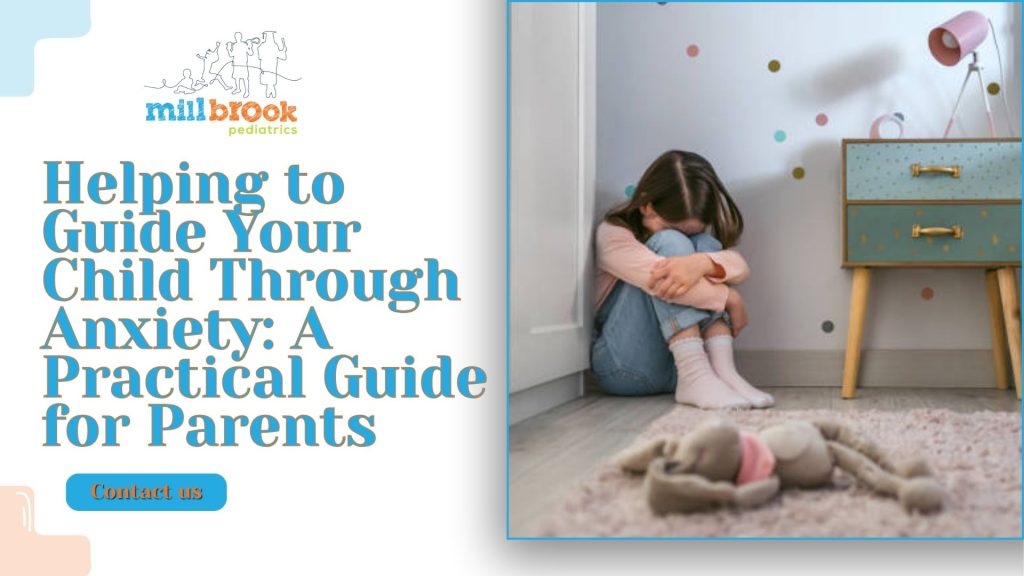
Worry is a normal part of childhood. But when your child refuses to go to school, clings to you in social settings, or loses sleep over things that seem small — that’s when anxiety starts getting in the way of daily life.
As a parent, it’s hard to watch. And it’s even harder to know what to do. Do you push them through it? Back off? Talk about it more or less?
This guide walks you through what’s actually happening in your child’s brain, how to spot the difference between normal worry and something more persistent, and what you can do at home to help — without accidentally making things worse.
What Is Childhood Anxiety, Really?
Anxiety is the body’s built-in alarm system. When your child senses danger — real or imagined — their brain triggers a stress response. Heart rate climbs. Muscles tighten. Their bodies get ready to run or freeze.
That’s not a flaw. It’s biology.
The problem shows up when the alarm fires too often, too loudly, or for situations that aren’t actually dangerous. A school presentation. A birthday party. Eating lunch in the cafeteria.
Children who struggle with childhood anxiety aren’t being dramatic. Their brains are genuinely signaling threat — and they don’t yet have the tools to talk that alarm back down.
Signs of Anxiety in Children: What to Watch For
Most parents first notice behavior changes before they connect them to anxiety. Here’s what that can look like across different ages.
In younger children (ages 3–8):
- Frequent stomachaches or headaches with no medical cause
- Crying at drop-off that doesn’t settle after a few minutes
- Fear of the dark, monsters, or being alone — past the typical developmental stage
- Nightmares and trouble falling asleep
- Clingy behavior or strong separation reactions
- Refusing to try new things or meet new people
In older children and tweens (ages 9–12):
- Avoiding activities they used to enjoy
- Excessive worry about grades, friendships, or making mistakes
- Asking for constant reassurance (“Are you sure everything will be okay?”)
- Physical complaints before stressful events
- Perfectionism and fear of failure
- Withdrawing from family conversations
One thing worth knowing: signs of anxiety in children don’t always look like worry. They often look like defiance, irritability, or avoidance. A child who refuses to go to a birthday party might not be “difficult” — they might be overwhelmed.
What Makes Anxiety Worse Without You Realizing It
Before getting to solutions, there’s one pattern worth naming because almost every caring parent falls into it.
When your child is anxious, your instinct is to help them feel better as fast as possible. So you:
- Let them skip the thing they’re scared of
- Answer “what if” questions with reassurance (“Nothing bad will happen, I promise”)
- Step in before they have a chance to struggle
This feels kind. And in the moment, it works — your child calms down.
But here’s the problem: every time a child avoids something scary and feels relief, their brain logs it as confirmation that the thing was dangerous. The anxiety gets stronger, not weaker.
Real child anxiety management isn’t about removing discomfort. It’s about building your child’s capacity to handle it.
10 Ways to Help Your Child Through Anxiety
1. Stop trying to eliminate anxiety — help them manage it
This is the hardest mindset shift, but it’s the most important one.
Your goal isn’t a child who never feels anxious. That’s not possible, and it’s not healthy. Your goal is a child who can feel anxious and still do the thing. Over time, repeated exposure to uncomfortable situations is what actually reduces anxiety. Not avoidance.
When helping your child through anxiety, the question to ask is: “How do I help them face this?” — not “How do I make this go away?”
2. Don’t let avoidance become a habit
Skipping the school play once because they’re nervous feels harmless. Skipping it three years in a row is a different story.
Avoidance teaches children that their fear is valid and that retreat is the solution. Every avoided situation becomes a little harder to face next time.
This doesn’t mean forcing a child into overwhelming situations without support. It means gradual, consistent exposure — one small step at a time.
3. Set realistic expectations, not false ones
Don’t promise your child that nothing bad will happen. You can’t guarantee that. And if something does go wrong, you’ve damaged their trust.
What you can say honestly:
- “This might feel uncomfortable, and that’s okay.”
- “You’ve handled hard things before.”
- “I’ll be here if you need me, but I think you can do this.”
That combination — honesty about difficulty plus confidence in their ability — is far more useful than empty reassurance.
4. Validate feelings without amplifying them
There’s a real difference between these two responses when your child says they’re scared of going to the doctor:
Response A: “I know, shots are the worst, I hate them too — are you sure you’re feeling okay? Maybe we should wait until you feel better about it.”
Response B: “I hear you, getting shots is not fun. You’re going to feel a little nervous, and that makes sense. You’ve done it before and you’ll get through it.”
Response A is well-meaning. It also sends the message: your fear is big and reasonable, maybe we should avoid this.
Response B validates the feeling without giving it more power than it needs. That’s the balance you’re looking for when coping with anxiety in kids.
5. Ask open questions, not leading ones
“Are you nervous about the test tomorrow?” is not a neutral question. You’ve just suggested they should be nervous.
Try instead:
- “How are you feeling about tomorrow?”
- “What’s on your mind?”
- “What do you think will be the hardest part?”
This opens the conversation without planting the anxiety.
6. Watch your own body language
Children read you constantly. If you stiffen when the neighbor’s dog runs over, your child notices. If your voice gets softer and more careful at the doctor’s office, they notice that too.
You don’t have to fake fearlessness. But be aware that your non-verbal signals teach them how to react to situations before they’ve even formed their own opinion.
7. Shorten the lead-up time
The anticipation of something scary is almost always worse than the thing itself.
If your child has a dentist appointment at 3pm, don’t mention it at breakfast. Tell them on the way there. The longer they sit with the dread, the more anxiety they build up — and none of that extra time makes them more prepared.
8. Work through “what if” together
Anxious children tend to get stuck in catastrophic thinking. “What if I fall on stage?” “What if no one talks to me at the party?” “What if you don’t come pick me up?”
Don’t just dismiss these with “that won’t happen.” Instead, work through it:
- “Okay, what if that happened? What would you do?”
- “That’s a scary thought. Let’s make a plan.”
Giving a child a concrete response to their worst-case scenario takes away some of the fear’s power. They stop feeling helpless.
9. Reward brave behavior, not perfect outcomes
If your child made it through the school presentation even though they were shaking — that’s worth celebrating. Not because they were perfect. Because they did it scared.
Recognizing brave behavior (showing up, trying, and tolerating discomfort) builds the identity of someone who can handle hard things. That identity is exactly what childhood anxiety tips are trying to build toward.
10. Model how you handle anxiety yourself
Children watch you more than they listen to you. If you say “don’t worry” but visibly catastrophize when something goes wrong, they learn from what you do.
You don’t need to hide that you feel stressed sometimes. In fact, narrating it out loud can help:
- “I’m a little nervous about this presentation at work. I’m going to take some deep breaths and prepare, and I’ll be okay.”
That’s a more useful lesson than pretending anxiety doesn’t exist.
When to Talk to a Pediatrician
Home strategies go a long way. But some children need more support than a parent can provide on their own. It’s time to loop in a professional when:
- Anxiety is interfering with school attendance or performance
- Your child is avoiding most social situations
- Physical symptoms (stomach pain, headaches) are frequent and have no medical explanation
- Sleep is consistently disrupted
- The anxiety has lasted more than a few weeks and isn’t improving
- Your child is expressing extreme fears or panic attacks
A pediatrician is usually the right first call. They can rule out physical causes, assess the severity, and refer you to a child therapist or psychologist if needed.
Mill Brook Pediatrics Is Here to Help
If you’re concerned about your child’s anxiety, you don’t have to figure it out alone. At Mill Brook Pediatrics, we work with families in Sudbury, MA and surrounding areas to support children’s mental and physical health from infancy through adolescence.
We’re currently welcoming new pediatric patients in Sudbury, MA. Whether you have questions about anxiety, developmental concerns, or need a trusted pediatric provider — we’d be glad to meet your family.
This article is for informational purposes only and does not replace professional medical advice. If you have concerns about your child’s mental health, please consult a licensed healthcare provider.



0 Comments