
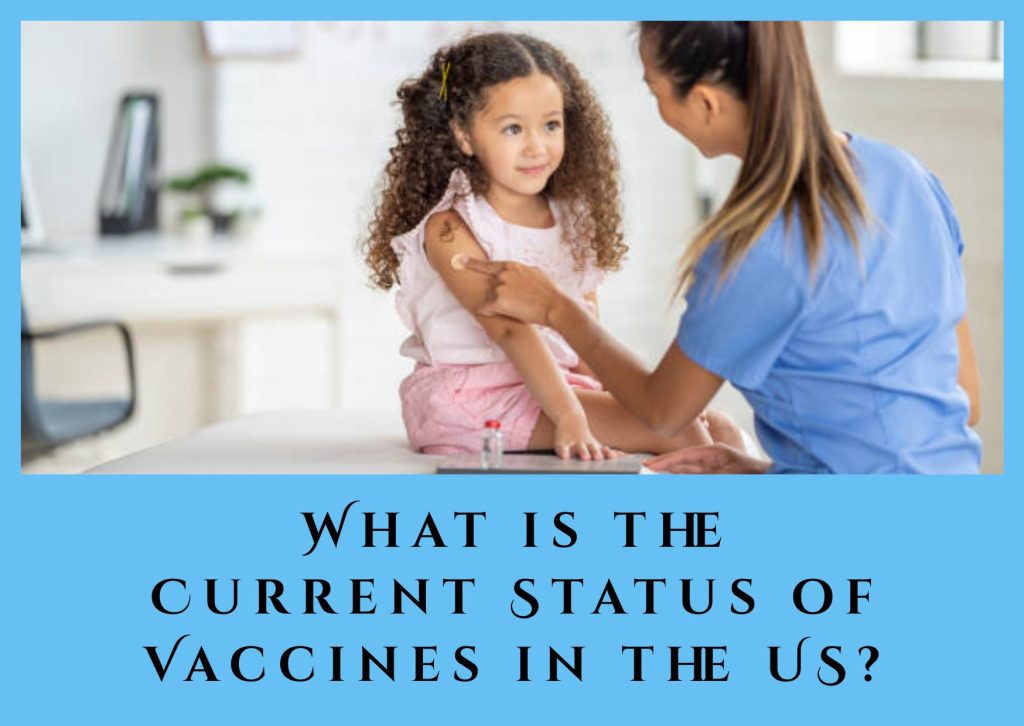
If you have kids, this is not the time to tune out vaccine policy news. The rules around childhood shots — what’s recommended, what’s required for school, and what your insurance will cover — are changing faster than most parents realize. Some of these changes are quiet and bureaucratic. Others are significant enough that pediatricians across the country are re-evaluating how they communicate with families.
Here is a clear-eyed look at where things stand right now.
The Federal Vaccine Landscape Has Shifted Significantly
The biggest driver of recent vaccine policy change is the federal government. Under HHS Secretary Robert F. Kennedy Jr., several decisions have reshaped vaccine infrastructure in the US — some with immediate effects on families, others with consequences that will take months or years to fully show up.
The most direct impact has been on COVID-19 vaccines. The FDA revoked the Emergency Use Authorization under which current COVID-19 vaccines had been operating. When approval was reissued, it came with new eligibility restrictions. Currently, COVID vaccines are approved without conditions only for people aged 65 and older, or those aged 5–64 with at least one underlying health condition. Children under 5 can only access one brand of the vaccine, and only if they have a documented comorbidity.
For healthy children under 5, a parent who wants their child vaccinated now needs a doctor willing to prescribe it “off-label.” That creates a real problem. Off-label prescribing carries added legal exposure for providers. Many physicians are uncomfortable with it. The result is that access depends heavily on which practice you go to and how willing that individual provider is to take on that risk.
The CDC’s Vaccine Advisory Panel Was Replaced
The CDC’s Advisory Committee on Immunization Practices (ACIP) is the group that sets recommended vaccine schedules in the US. It typically has 15 expert members — infectious disease specialists, pediatricians, and epidemiologists. In June 2025, all 17 sitting members were removed and replaced with a smaller panel of seven, several of whom have publicly questioned vaccine science.
The new vaccine policy direction coming from this panel is already visible. The new ACIP voted to recommend only single-dose, thimerosal-free flu vaccines for everyone aged 6 months and older. The thimerosal focus reflects a theory — that the preservative causes autism — that has been studied extensively and not supported by evidence. But because ACIP now includes members who have raised this concern, it has shaped the recommendation.
For RSV, the panel voted 5–2 to recommend a new vaccine called clesrovimab for infants under 8 months entering their first RSV season. That vote passed, but the margin tells you the panel is less consensus-driven than it used to be.
mRNA Research Has Been Halted
In August 2025, HHS announced it would stop all mRNA vaccine development under BARDA (Biomedical Advanced Research and Development Authority). Around $500 million in funding has been redirected to what the department calls “safer, broader vaccine platforms.”
Among the vaccines this affects: candidates targeting H5N1 (bird flu), a strain that researchers have been watching closely as a potential pandemic risk.
The practical effect of this decision will not show up overnight. But for new vaccines that were in the development pipeline — including flu variants and other respiratory viruses — this creates a multi-year gap. Vaccine development takes time. Stopping research now means fewer options later.
What States Are Doing
Federal changes don’t happen in isolation. States set their own school vaccine requirements, and several are now moving to loosen them. Florida has announced an effort to end all vaccine requirements for children attending school. Other states are watching closely.
This matters for childhood immunization rates. School requirements are one of the main reasons vaccination coverage in the US has historically been high. When requirements are removed, vaccination rates tend to drop — not because parents become anti-vaccine, but because the default changes. Without a requirement, some families simply don’t prioritize it until there is an outbreak.
The US also withdrew funding from Gavi, an international organization that has vaccinated over one billion children against preventable diseases since it was founded. That decision is less visible to American families but has real consequences globally — and disease doesn’t respect borders.
What This Means for Pediatric Practices
Pediatrics Physicians Vaccine Policy is no longer a simple matter of following a CDC schedule and billing insurance. Practices now face a more complicated reality.
At practices like Mill Brook Pediatrics, physicians are fielding harder questions from parents who are confused about what their children need, what is covered by insurance, and what is actually recommended versus what used to be recommended. The answers to those questions have changed in the past year, and they may change again soon.
For pediatricians, the practical challenges are:
- COVID vaccine prescriptions for healthy young children now require off-label prescribing, which creates legal and liability questions
- The flu vaccine recommendation now specifies thimerosal-free formulations, which may affect supply and cost
- Families who rely on Medicaid or CHIP may face different coverage rules depending on which vaccines lose their routine recommendation status
- School enrollment vaccine requirements vary by state and are shifting
The honest advice for any practice: stay current, communicate proactively with families, and document your reasoning carefully when prescribing off-label.
What Parents Should Know About Childhood Immunization Right Now
For most vaccines — MMR, polio, DTaP, varicella — nothing has changed. The childhood immunization schedule for core vaccines is still intact. If your child is up to date on those, they are in good shape.
Where it gets complicated:
- COVID vaccines for young healthy children now require an off-label prescription. If your pediatrician is not comfortable doing that, you may need to find one who is, or wait for policy to shift again.
- Flu vaccines are still recommended, but your provider may now specifically recommend thimerosal-free options. Ask which formulation they carry.
- RSV protection for infants under 8 months is now officially recommended via clesrovimab — if your infant is in that window, talk to your pediatrician now.
The broader picture: vaccine policy news is moving quickly, and there is genuine uncertainty about what comes next. The MAHA (Make America Healthy Again) agenda promises more changes. ACIP meetings are still scheduled. Court challenges to some FDA decisions are likely.
The Bottom Line
This is not a moment to panic, but it is a moment to pay attention. The new vaccine policy landscape in the US is less settled than it has been at any point in recent decades. Decisions that used to be routine — what shots your kid gets, when, and at which clinic — now require more active navigation.
Talk to your pediatrician. Ask specific questions about what has changed and what hasn’t. Practices grounded in evidence-based medicine, like Mill Brook Pediatrics, are the right resource for families trying to make sense of a policy environment that is genuinely in flux.
Childhood immunization has been one of the most effective public health tools in modern medicine. The current period of vaccine policy change does not erase that history — but it does require parents, providers, and policymakers to stay sharp.




0 Comments